
A nursing pay gap is defined as the difference between what a registered nurse earns and what the market, inflation, or a peer in a comparable role actually warrants. Identifying that gap is the first step toward closing it. The problem is more widespread than most nurses realize. Between 2020 and 2026, nursing wages rose 18.7% nominally while consumer prices climbed 22.1%, leaving the average RN roughly $2,400 poorer in real purchasing power. Add a persistent gender pay gap and structural pay compression, and the case for every nurse to actively identify their own pay disparity becomes clear.
How to identify if you're an underpaid nurse
The most reliable method for identifying a nursing pay gap is comparing your nominal wage growth against inflation-adjusted benchmarks for your specialty, region, and career stage. Nominal raises feel like progress. They are not, if inflation outpaces them.

Wage growth vs. inflation: the core calculation
The gap between wages and inflation from 2020 to 2026 tells a clear story. Nursing wages grew 18.7% over that period. Inflation grew 22.1%. That 3.4-percentage-point shortfall translates to roughly $2,400 in lost purchasing power for the average registered nurse. That is money you earned on paper but cannot spend.
The calculation itself is straightforward. Take your 2020 base salary and multiply it by 1.221 (the inflation factor). If your current salary is lower than that result, you have lost real income. Most nurses who run this number for the first time are surprised by how large the gap is.
Variation by specialty matters here. ICU nurses, OR nurses, and nurse anesthetists tend to see stronger nominal wage growth than general med-surg staff. But even in higher-paying specialties, real income losses are common when inflation is factored in. Checking salary benchmarks by career stage gives you a more precise comparison point than national averages alone.
Pro Tip: Pull your W-2s from 2020 and 2025. Divide your 2025 gross by your 2020 gross, then subtract 1.221. A negative result confirms a real wage loss.
| Year | Nominal Wage Growth | CPI Increase | Real Purchasing Power Change |
|---|---|---|---|
| 2020–2026 | +18.7% | +22.1% | Approximately -$2,400 |
| 2025 (staff RNs) | Below 2% | Ongoing | Negative in real terms |
| 2025 (RN managers) | 2.7%–3.0% | Ongoing | Near flat |
What causes pay gaps in nursing?
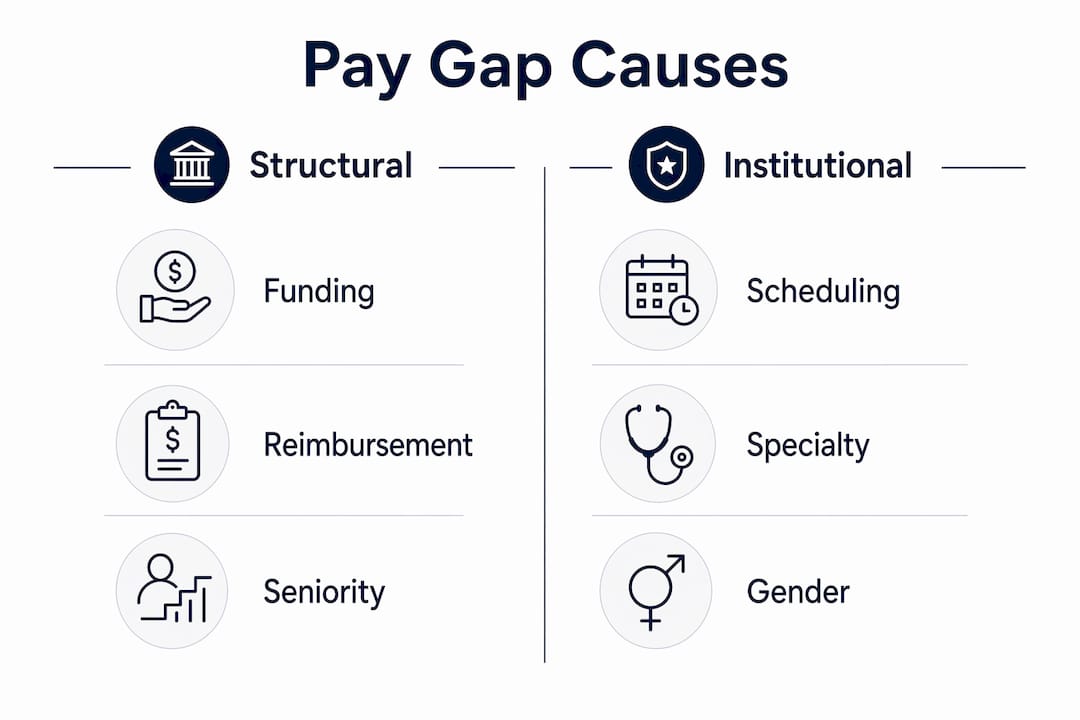
Nursing pay gaps form through a combination of structural, institutional, and scheduling factors that most nurses never see directly. Understanding these causes helps you identify where your own gap originates.
The reimbursement structure problem
Nursing services are bundled into hospital room rates rather than billed as a separate line item. This makes nursing an invisible cost center in hospital accounting. When administrators look for budget cuts, nursing labor is an easy target because its revenue contribution does not appear on the ledger. That structural invisibility limits how aggressively hospitals will raise base pay, regardless of market conditions.
"The invisibility of nursing's economic value in reimbursement leads to constrained compensation, which cascades into budget limitations, staffing shortages, and burnout affecting patient care and nurse retention."
Pay compression and agency costs
Pay compression is the flattening of wages across experience levels. Staff RNs saw base pay growth below 2% in the first half of 2025, while RN managers received raises between 2.7% and 3.0%. That gap means a nurse with 15 years of experience may earn only marginally more than a new graduate at the same institution. Compression punishes loyalty and experience.
Hospital premium labor costs compound the problem. Travel and agency nurses can cost two to three times the rate of permanent staff. When hospitals spend heavily on agency labor, the remaining wage budget for permanent staff shrinks. Permanent nurses absorb the cost of a staffing model they did not create.
- Nursing bundled into room rates, not billed separately
- Base pay growth below 2% for staff RNs in early 2025
- Agency nurse costs two to three times permanent staff rates
- Flexibility penalties for nurses who need adapted schedules
- Pay scales that reward new hires over tenured staff
How to find pay disparities in your own workplace
Identifying nursing wage discrepancies in your own role requires four concrete steps. Each one builds on the last.
- Gather your current compensation data. Document your base hourly rate, shift differentials, bonuses, and benefits. Total compensation matters, not just base pay.
- Pull market benchmarks for your specialty and state. Use a salary database that filters by specialty, hospital type, and location. HighPaidRN's platform lets you filter by state, specialty, and employment condition to get verified 2026 data. Understanding why nursing wages vary by state is critical because a $5,000 gap in California means something very different than the same gap in Mississippi.
- Calculate your inflation-adjusted wage. Apply the 22.1% inflation factor to your 2020 base salary. Compare that number to your current salary. Any shortfall is a real wage loss.
- Check for gender-based disparities. Male nurses earn between 4% and 15% more than female nurses across specialties. If you are a female nurse, compare your pay to published median figures for male nurses in your role.
- Look for compression signals. If your raises have been below 2% annually for more than two years, and new hires in your unit earn close to your rate, you are experiencing pay compression.
Pro Tip: Create a simple spreadsheet with three columns: your current pay, the inflation-adjusted benchmark, and the market median for your specialty. The largest gap between any two columns is your negotiation target.
| Comparison Method | What It Reveals | Data Source |
|---|---|---|
| Nominal vs. inflation-adjusted | Real income loss over time | CPI data + your W-2s |
| Specialty market median | Under or over market positioning | HighPaidRN salary database |
| Gender pay comparison | Gender-based wage disparity | Bureau of Labor Statistics, academic studies |
| Peer compression check | Experience not reflected in pay | Internal HR data, union contracts |
What strategies close a nursing pay gap?
Only 55% of nurses received a meaningful raise in 2026. That means nearly half the nursing workforce is standing still while costs rise. Closing a pay gap requires deliberate action across several fronts.
- Negotiate starting salaries with market data. Negotiating a $5,000 higher starting salary can produce more than $215,000 in additional lifetime earnings due to compounding raises and benefits. Most nurses accept the first offer. That single decision costs more than most realize.
- Expand the negotiation beyond base pay. Pay grids are baseline frameworks. Shift differentials, sign-on bonuses, PTO accrual rates, and continuing education reimbursements are all negotiable. A nurse who secures a $3,000 sign-on bonus and an extra week of PTO has closed part of the gap without touching base pay.
- Use inflation data as a negotiation anchor. Walk into your review with the 22.1% inflation figure and your real wage calculation. Ask your manager to close the gap between your nominal raise history and actual cost-of-living increases. This is called alignment negotiation, and it reframes the conversation from "I want more" to "my pay has not kept up."
- Consider specialty or geographic transitions. Nurse wages differ significantly by employer and by region. Moving from a general med-surg role to an ICU or OR position, or relocating from a low-wage state to a higher-paying market, can close a gap faster than any single negotiation.
Practical negotiation language matters. Saying "Based on current market data for my specialty and region, my compensation is approximately X% below median" is more effective than "I feel underpaid." Data removes emotion and puts the conversation on factual ground.
How do gender pay gaps form in nursing?
The gender pay gap in nursing is documented, persistent, and larger than most nurses expect. Male nurses earn between 4% and 15% more than female nurses across specialties, despite women making up approximately 90% of the nursing workforce. Male nurses reported median salaries about $14,000 higher than female nurses in recent years, with little narrowing of this gap.
The gap persists even after controlling for education level, union membership, and leadership roles. That means the disparity is not explained by credentials or career choices alone. Structural and sociological factors drive it.
- "Greedy jobs" that reward 24/7 availability favor nurses without caregiving responsibilities, who are disproportionately male.
- Flexibility penalties reduce pay growth for nurses who request schedule accommodations, a group that skews female.
- Female nurses are less likely to negotiate starting salaries, compounding the gap from day one.
- Leadership pipelines in nursing still channel more men into higher-paying management and CRNA roles.
The Bureau of Labor Statistics and multiple academic studies confirm these patterns. Recognizing that your pay gap may have a gender component is not a grievance. It is a data point that strengthens your negotiation position.
Key Takeaways
Nurses who actively compare their pay against inflation-adjusted benchmarks, market medians, and gender-disaggregated data are the ones most likely to identify and close their pay gaps.
| Point | Details |
|---|---|
| Real wages have declined | Nursing wages grew 18.7% from 2020–2026 while inflation rose 22.1%, cutting real purchasing power. |
| Pay compression is widespread | Staff RN base pay grew below 2% in early 2025, far behind inflation and management raises. |
| Gender gaps persist | Male nurses earn 4%–15% more than female nurses, with a median difference near $14,000. |
| Starting salary negotiation compounds | A $5,000 higher starting salary can generate over $215,000 in additional lifetime earnings. |
| Data is your best tool | Comparing specialty benchmarks, inflation factors, and gender medians reveals exactly where your gap sits. |
Why I think most nurses underestimate their pay gap
After years of working in and around nursing compensation, the pattern I see most often is not anger or resignation. It is unawareness. Nurses are trained to focus on patient outcomes, not pay structures. That focus is admirable, and it costs them financially.
The reimbursement structure problem is the part that frustrates me most. Nursing is bundled into a room rate. That single accounting decision makes it nearly impossible for nurses to point to a revenue line and say "that is what I generate." Physicians can. Surgeons can. Nurses cannot. Until that changes at a policy level, individual nurses have to work harder to make the case for their own value.
What actually works is showing up to a negotiation with three numbers: your inflation-adjusted wage, the market median for your specialty, and the gender median for your role. Most managers have never had a nurse walk in with all three. It changes the conversation immediately. You can find ways to ask for a higher salary that are grounded in this kind of data, and they work better than any script.
The nurses who close their gaps are not the loudest or the most senior. They are the most prepared.
— RN
HighPaidRN helps you see exactly where your pay stands
Knowing you have a pay gap and knowing its exact size are two different things. HighPaidRN gives you the second.
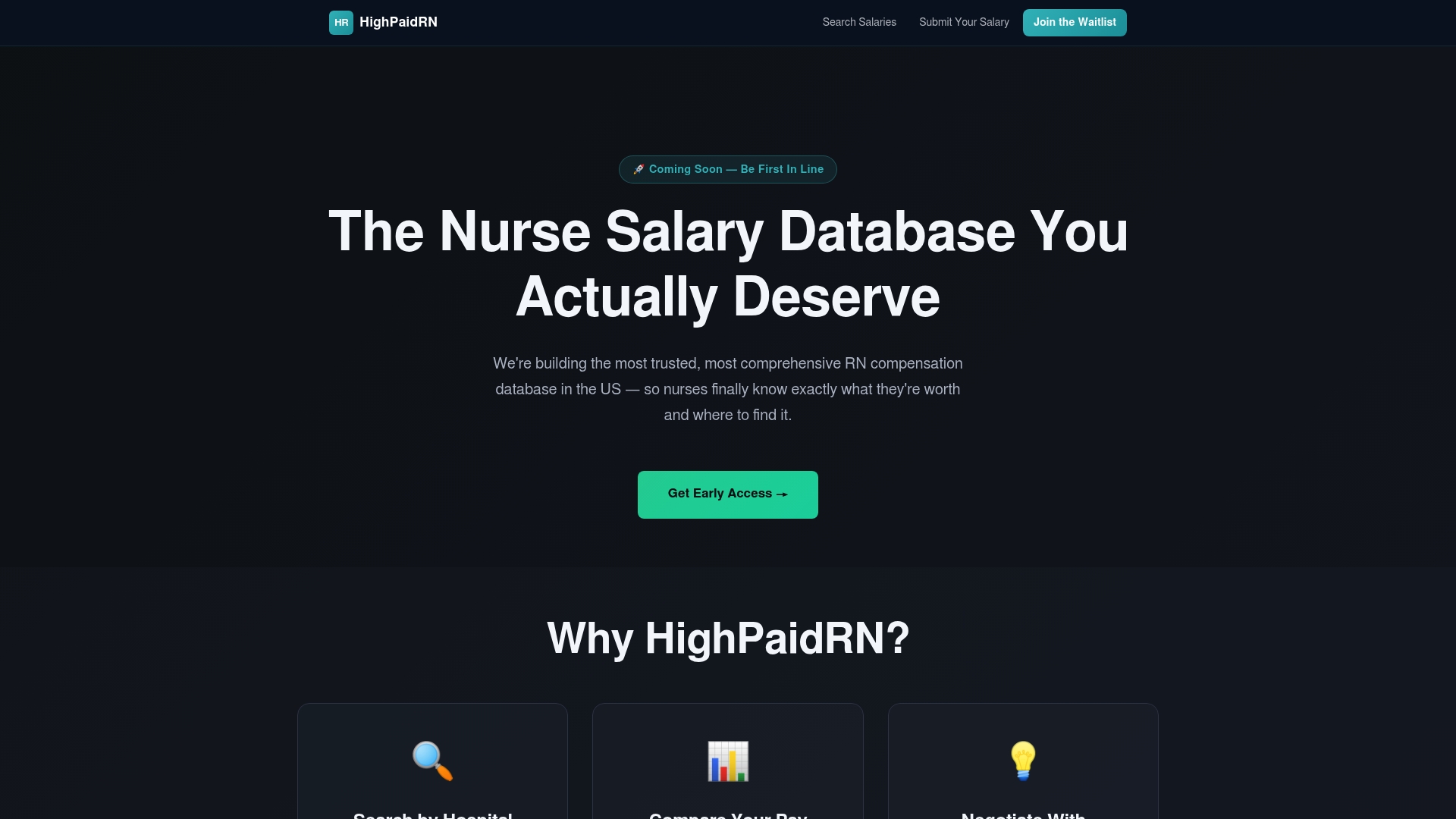
The HighPaidRN salary database is built specifically for registered nurses and updated with 2026 verified data. You can filter by state, specialty, hospital type, and employment condition to get a benchmark that actually matches your situation. Whether you are an ICU nurse in Texas or a travel nurse comparing markets, the platform shows you where your pay sits relative to peers. Nurses who contribute their own salary data anonymously help build a more complete picture for everyone. Use the data to prepare for your next review, support a specialty transition, or simply confirm whether your current pay is fair.
FAQ
What is a nursing pay gap?
A nursing pay gap is the difference between a nurse's actual earnings and what the market, inflation adjustment, or a comparable peer earns in the same role. It can result from pay compression, gender disparities, or wages that have not kept pace with inflation.
How much have nurse wages fallen behind inflation?
Between 2020 and 2026, nursing wages rose 18.7% while inflation climbed 22.1%, resulting in approximately $2,400 in lost real purchasing power for the average registered nurse.
Do male nurses really earn more than female nurses?
Male nurses earn between 4% and 15% more than female nurses across specialties, with a median salary difference of approximately $14,000, even after controlling for education and union membership.
What is pay compression in nursing?
Pay compression occurs when base pay differences between new graduates and experienced nurses shrink over time. Staff RNs saw base pay growth below 2% in the first half of 2025, while RN managers received raises of 2.7%–3.0%.
How much does negotiating a starting salary matter?
Negotiating a $5,000 higher starting salary can result in more than $215,000 in additional earnings over a 30-year nursing career due to compounding raises and benefits tied to base pay.