

Nursing salary transparency is defined as the open sharing of pay information across a healthcare organization, giving nurses access to real compensation data by role, specialty, and experience level. The median RN salary rose 6% to $85,000 in 2026, yet only 47% of nurses report satisfaction with their pay. That gap between earnings growth and satisfaction points directly to a transparency problem. When nurses cannot see how their pay compares to peers, raises feel arbitrary and trust erodes. The benefits of nursing salary transparency go far beyond knowing a number. Open pay practices reduce wage gaps, speed up hiring, and give nurses the data they need to negotiate with confidence.
1. How does nursing salary transparency promote pay equity?
Pay equity is the most direct benefit of open salary practices. When pay data is visible, unjust wage differences become impossible to ignore. A nurse with ten years of ICU experience earning less than a newer colleague in the same unit cannot be dismissed when the numbers are on the table.
Transparent pay structures support equal pay for equal work across gender, race, and seniority lines. They shift the conversation from "what can I get away with asking?" to "what does the data show I should earn?" That shift benefits every nurse, regardless of how comfortable they are with negotiation.

Union contracts offer the clearest example of pay equity through transparency. Step scales in union agreements eliminate ambiguity about when raises occur and by how much. The Washington State Nurses Association (WSNA) negotiated contracts that removed "ghost steps," which were pay grades nurses technically qualified for but never reached in practice. That change accelerated top wage attainment by six years for many nurses.
Key ways transparency drives pay equity:
- Exposes unexplained wage gaps between nurses with similar credentials and experience
- Removes negotiation advantage disparities that favor nurses who are more assertive or better connected
- Creates a shared baseline so all nurses know what fair compensation looks like
- Supports advocacy by giving union representatives and HR teams concrete data to work from
Pro Tip: If your employer does not publish salary bands, ask HR for the pay range tied to your job classification. In many states, employers are legally required to provide this information upon request.
2. How does salary transparency improve nurse job satisfaction and retention?
Pay satisfaction and transparency are directly linked. Transparent pay builds trust between nurses and their employers, and trust is foundational to long-term retention. When nurses understand how their salary is determined and what it takes to earn more, they feel respected rather than managed.
The 2026 data makes this concrete. Nurse pay satisfaction climbed from 32% to 47% as salary gains and transparency efforts increased together. That 15-point jump did not happen by accident. It reflects what happens when nurses can see where they stand and where they can go.
Transparency also clarifies career advancement. A nurse who can see the salary benchmarks for a charge nurse or clinical educator role has a clear financial reason to pursue that path. Without that visibility, career growth feels abstract and the financial reward feels uncertain.
Retention benefits of salary transparency include:
- Reduced turnover because nurses are not blindsided by pay disparities they discover too late
- Stronger employer trust when pay decisions feel fair and explainable
- Clearer earning potential that motivates nurses to stay and advance rather than leave for unknown opportunities elsewhere
- Better alignment between nurse expectations and actual compensation at hire
Salary transparency is necessary but not sufficient on its own. Nurses also value scheduling flexibility and autonomy alongside clear pay. Employers who combine open pay practices with respectful working conditions see the strongest retention results.
3. How does salary transparency affect recruiting and hiring in nursing?
Transparent salary ranges make hiring faster and more efficient. Publishing clear pay bands reduces time spent in failed salary negotiations and increases offer acceptance rates. Candidates who apply already knowing the pay range are self-selected. They want the job at that compensation level, which removes a major source of late-stage hiring friction.
Transparent salary ranges act as a self-selection tool. Nurses who find the range too low opt out early. Nurses who find it fair move forward. That filtering saves recruiters hours per hire and reduces the cost of extended vacancy periods.
Steps that show how transparency improves the hiring process:
- Post the salary range in the job listing. Candidates assess fit before applying, which reduces unqualified or misaligned applications.
- Include total compensation details. Sign-on bonuses, loan repayment, tuition reimbursement, and wellness benefits all factor into a nurse's decision. Employers who list full packages outcompete those who do not.
- Confirm the range early in interviews. Addressing pay in the first conversation prevents wasted time on both sides.
- Use consistent pay bands across similar roles. Inconsistency signals internal disorganization and pushes candidates toward employers with clearer structures.
Pro Tip: Before your next interview, use HighPaidRN to look up verified salary data by specialty and state. Walking in with real market data changes the entire tone of the compensation conversation.
4. What are common barriers to nursing salary transparency and how can they be overcome?
Resistance to pay transparency is real, and it comes from multiple directions. Concerns about salary privacy and internal politics are the most common objections from management. Some leaders worry that sharing pay data will create conflict or resentment among staff. Others misunderstand what transparency legally requires or confuse it with publishing every individual's salary publicly.
Barriers nurses and advocates most often encounter:
- Management resistance rooted in a belief that pay secrecy preserves order
- Legal misunderstanding about what pay transparency laws actually mandate versus what employers choose to share
- Cultural norms in healthcare organizations that treat salary as a private matter
- Lack of standardized pay structures that make transparency feel risky because the data reveals inconsistency
The most effective solutions work within existing systems. Union contracts with step scales are the clearest fix for organizations willing to bargain. Anonymous salary reporting platforms let nurses share data without exposing individuals. Published pay bands by job grade give nurses visibility without requiring full disclosure of every employee's exact salary.
| Barrier | Solution |
|---|---|
| Management resistance | Present retention and hiring data showing transparency reduces turnover costs |
| Legal misunderstanding | Reference state pay transparency laws and NLRA protections for salary discussions |
| No pay structure | Implement job grade bands with defined salary ranges per level |
| Privacy concerns | Use anonymous reporting tools and aggregate data rather than individual disclosure |
5. What real-world examples show successful nursing salary transparency efforts?
Union contracts are the most documented example of nursing salary transparency in practice. The WSNA's negotiated step scales removed pay ambiguity entirely. Nurses could see exactly when they would receive raises, how large those raises would be, and what the top of the pay scale looked like. Removing ghost steps accelerated top wage attainment by six years, a concrete and measurable outcome.
Hospital systems that publish salary ranges in job postings report faster hiring timelines and higher offer acceptance rates. Pay transparency shortens hiring timelines and increases cost-efficiency, which matters in a market where nursing vacancies carry real financial costs for health systems.
Nurses who use verified salary databases report stronger negotiating positions. Having pay details turns a salary conversation from assumption-based to evidence-based. A travel nurse who knows the going rate for ICU work in their target state walks into a contract negotiation with a fundamentally different posture than one who is guessing.
The pattern across these examples is consistent. Transparency produces better outcomes for nurses and for the organizations that employ them. The 2026 nursing job market rewards employers who commit to open pay practices with stronger candidate pipelines and lower turnover.
Key Takeaways
Nursing salary transparency directly improves pay equity, job satisfaction, hiring efficiency, and workforce retention when implemented through clear pay bands, union step scales, and verified salary data.
| Point | Details |
|---|---|
| Pay equity improves with transparency | Open salary data exposes wage gaps and supports equal pay for equal work across all nurse demographics. |
| Satisfaction rises when pay is clear | Nurse pay satisfaction jumped from 32% to 47% as salary gains and transparency efforts increased together. |
| Hiring becomes faster and cheaper | Publishing salary ranges upfront filters candidates early and reduces failed late-stage negotiations. |
| Union step scales are proven models | WSNA contracts eliminated ghost steps and accelerated top wage attainment by six years for nurses. |
| Transparency alone is not enough | Nurses also need scheduling flexibility, autonomy, and respectful workplaces to stay long-term. |
Why salary transparency is the foundation nursing cannot afford to skip
I have watched nurses leave jobs they loved because they found out, months or years in, that a colleague with less experience was earning more. The frustration is not just about the money. It is about what the pay gap signals: that the employer did not value them the way they thought. Salary secrecy does not protect anyone. It protects the institution's ability to pay inconsistently.
The nurses I have seen negotiate most effectively are the ones who came in with data. Not attitude, not ultimatums. Data. They knew what the market paid by specialty and by state, and they made a straightforward case. That is what transparency enables at scale. It gives every nurse, not just the well-connected ones, the information they need to advocate for themselves.
The broader workforce argument is equally clear. A profession dealing with chronic staffing shortages cannot afford to lose nurses to pay disputes that open data would have prevented. Salary transparency is not a radical ask. It is a basic condition for a functional, stable nursing workforce.
— RN
HighPaidRN puts real salary data in your hands
Knowing what you should earn is the first step toward earning it. HighPaidRN is a specialized salary database built for registered nurses, with verified compensation data filtered by specialty, state, hospital type, and employment condition.
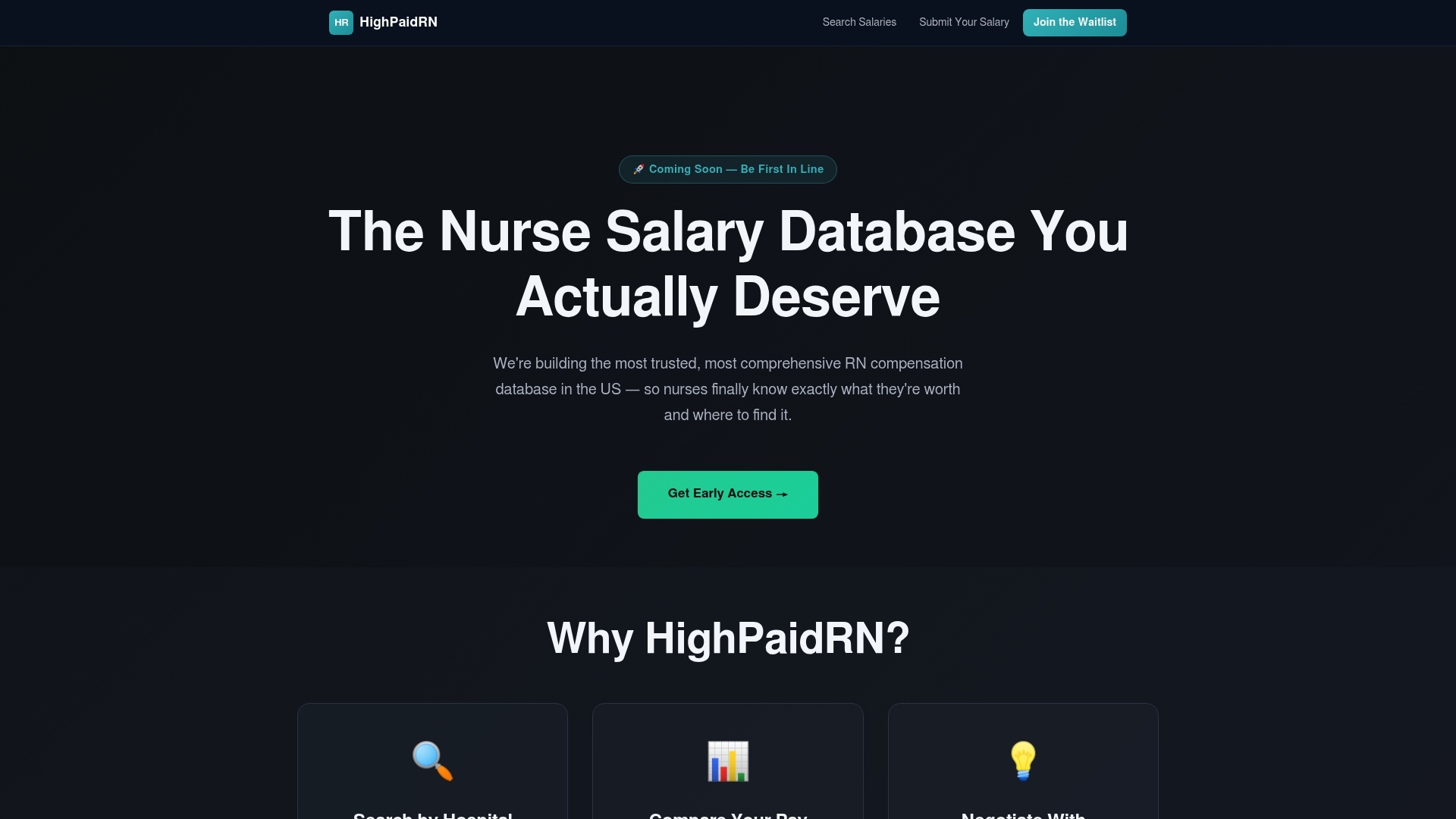
Whether you are a travel nurse comparing ICU contracts or a staff nurse preparing for your annual review, HighPaidRN gives you the market data to negotiate from a position of knowledge rather than guesswork. Nurses who contribute their own salary data anonymously help build a collective resource that strengthens the entire profession. The platform also connects nurses with job opportunities that list transparent pay, so you can find roles where fair compensation is already part of the offer.
FAQ
What is salary transparency in healthcare?
Salary transparency in healthcare means employers openly share pay ranges, compensation structures, and wage progression criteria with current and prospective nurses. It gives nurses the information they need to assess whether their pay is fair relative to the market.
How do pay transparency laws help nurses?
Pay transparency laws require employers to disclose salary ranges in job postings or upon request, which prevents lowball offers and reduces wage gaps. Many states now mandate this disclosure, giving nurses legal backing to ask for pay information without fear of retaliation.
What are the main barriers to nursing pay transparency?
The most common barriers are management resistance, legal misunderstanding, and a lack of standardized pay structures. Organizations that treat salary as confidential often do so because their pay practices are inconsistent, not because transparency would harm nurses.
How do nursing unions support salary transparency?
Union contracts with step scales publish exact salary progression timelines, removing ambiguity about when and how much nurses will earn. The WSNA's negotiated contracts are a documented example, eliminating ghost steps and accelerating top wage attainment by six years.
Does salary transparency actually reduce nurse turnover?
Transparent pay reduces turnover by aligning nurse expectations with actual compensation from the start. When nurses understand how pay is determined and what advancement looks like financially, they are less likely to leave after discovering pay disparities they could not see at hire.